Since 1885
Made in USA
Factory Direct
#1 Online Parts Store!
DeBrovys landfill covers and alternative daily cover tarps are reusable, large-area cover options for landfill operations, stockpiles, active work areas, and other waste-management applications that need durable temporary coverage. The correct cover starts with the area being covered, the material construction, the reinforcement pattern, the deployment method, and the edge hardware needed for the site.
This category brings together polypropylene and polyethylene landfill-cover options, reinforced construction styles, standard dimensions, and custom fabrication choices. Buyers can use the product grid above to compare available cover products, then use the specifications below to identify the material, size range, webbing style, and attachment details that best fit the operating requirement.
Alternative daily cover needs vary by site. Before ordering, confirm the use case, finished coverage area, expected exposure, crew or equipment deployment method, and all permit, operating-plan, and local requirements. A tarp can support a site’s coverage plan, but it does not replace engineered landfill systems or applicable regulatory requirements.
DeBrovys offers the following existing material options for landfill covers and alternative daily cover applications. Select material with the site conditions, intended coverage duration, handling needs, and reinforcement design in mind.
Download the material-specific DeBrovys specification sheet below when available. The two 20 mil rows use the current matching catalog value of 10 oz. per sq. yd. Confirm final project requirements, current availability, and material construction before ordering.
| Material | Nominal weight / thickness | Color or construction | Planning note | Specification sheet |
|---|---|---|---|---|
| Polypropylene | 6 oz. sq/yd / 28 mil | Black | Existing landfill-cover material option | Download specification PDF |
| Polypropylene | 9 oz. sq/yd / 30 mil | White | Existing landfill-cover material option | Specification sheet not yet available |
| Polypropylene | 12 oz. sq/yd / 42 mil | Black | Existing landfill-cover material option | Specification sheet not yet available |
| Polyethylene | 6.1 oz. sq/yd / 12 mil | White/Silver | Shown in the existing category image | Download specification PDF |
| Polyethylene | 6.6 oz. sq/yd / 14 mil | Black/White | Existing landfill-cover material option | Specification sheet not yet available |
| Polyethylene | 10 oz. sq/yd / 20 mil | White/White | Existing landfill-cover material option | Download specification PDF |
| Polyethylene | 10 oz. sq/yd / 20 mil | Flame retardant | Existing landfill-cover material option | Download specification PDF |
| String-reinforced polyethylene | 8.4 oz. sq/yd / 12 mil | Black/White | Existing landfill-cover material option | Download specification PDF |
| Flame-retardant polyethylene | 9.4 oz. sq/yd / 24 mil | Light yellow | Most-popular option identified in the existing category content | Specification sheet pending current catalog confirmation |
Selection guidance: A lighter material is not automatically the right choice for every job, and a heavier material is not automatically the best answer. Compare expected deployment frequency, wind conditions, UV exposure, edge loading, attachment method, and the planned coverage area before selecting a cover. For landfill, transfer, and broader solid-waste tarp routes, see Waste Industry Tarps | Solid Waste Tarps.
Landfill covers are available in three established webbing layouts. Select a style based on the site’s handling plan, the cover’s finished dimensions, the anticipated load paths, and the way the cover will be secured and deployed.
| Style | Existing webbing configuration | Reference document |
|---|---|---|
| Style A | Webbing sewn both vertically and horizontally across hems and seams | View Landfill Cover Style A PDF |
| Style B | Webbing sewn across all seams and hems only | View Landfill Cover Style B PDF |
| Style C | Webbing sewn vertically across seams and hems, plus horizontal webbing 6 feet from the hem | View Landfill Cover Style C PDF |
Use the style drawings as a starting point for an equipment and site discussion. When a landfill cover will use non-standard edges, unusual tie-down locations, large dimensions, or a specialized deployment process, identify those requirements before fabrication.
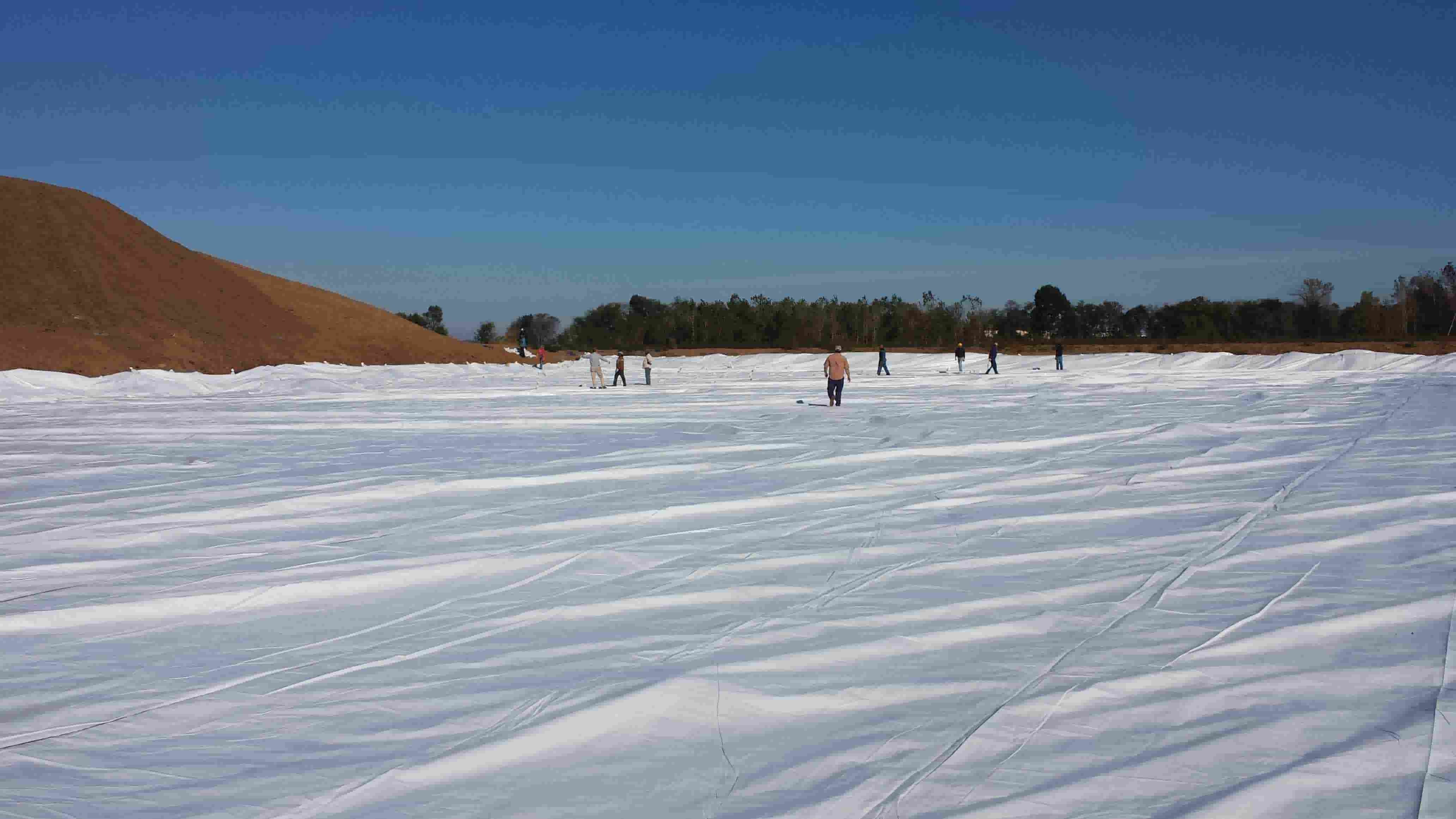
12 mil white/silver polyethylene shown. Existing category information references a polyethylene UV life test method of ASTM G53 with more than 90% strength after 2,000 hours. Actual field service depends on environmental exposure, handling, installation, storage, wind loading, and other site-specific conditions.
| Thickness | Existing planning range | Lower-intensity sun note in existing category content |
|---|---|---|
| 12 mil | Approximately 2–2.5 years | Up to 5 years |
| 14 mil | Approximately 4 years | Up to 7 years in cooler climates |
| 20 mil | Approximately 6 years | Up to 10 years in cooler climates |
| 24 mil | Approximately 8–10 years | Up to 15 years in cooler climates |
These are planning references from the existing category information, not a warranty or a substitute for a site-specific assessment. For a broader discussion of temporary coverage, windblown debris, worker exposure, and runoff considerations, read How Heavy-Duty Tarps Improve Health & Safety at Landfills.
Existing standard sizes include the following dimensions. Custom sizes can be manufactured on request when the site requires a different finished coverage area, a custom deployment layout, or specialized edge and attachment details.
| Size group | Existing standard dimensions |
|---|---|
| 40-foot series | 40' × 40', 40' × 50', 40' × 100', 40' × 120' |
| 48- and 50-foot series | 48' × 50'; 50' × 50', 50' × 70', 50' × 80', 50' × 100', 50' × 125', 50' × 150', 50' × 200' |
| 60- to 84-foot series | 60' × 100'; 75' × 72', 75' × 75'; 80' × 120'; 84' × 100' |
| 96- to 150-foot series | 96' × 100'; 100' × 100', 100' × 125', 100' × 150', 100' × 200'; 120' × 120'; 150' × 150' |
| Custom fabrication | Manufactured on request for application-specific dimensions and configurations |
Before requesting a custom cover: measure the required finished coverage area, identify the planned overlap, document the edge that will carry the highest load, record the attachment and tie-down method, and note how people or equipment will move the cover. Those details help align the material, webbing style, pocket layout, and hardware with the actual operation.
DeBrovys can evaluate custom fabrication requirements for landfill covers when standard construction does not match the application. Existing custom options include:
For large-area coverage, describe the deployment equipment, lifting points, expected wind exposure, storage method, and the desired edge treatment. When a project calls for joined or oversized construction, discuss heat-sealed panel requirements with DeBrovys as part of the custom-fabrication review.
Landfill covers serve a different purpose from liners and cap covers. Use a landfill cover or alternative daily cover route when evaluating temporary, reusable coverage for landfill operations. Use the appropriate separate resource for liner and cap-cover applications, and verify all site-specific engineering and regulatory requirements with the responsible professionals.
Alternative daily cover products are used for landfill coverage operations instead of relying solely on earthen daily cover. The appropriate material, construction, dimensions, and deployment method should be selected for the site’s operating plan and requirements.
Start with the required coverage area, expected outdoor exposure, handling method, reinforcement needs, and the finished edge or tie-down design. The material table above lists the current polypropylene and polyethylene options so the cover can be evaluated against the application.
Style A, B, and C use different webbing layouts. Compare the reference PDFs with the cover size, the way the cover will be deployed, the expected load paths, and the site’s edge and attachment requirements before choosing a style.
Yes. Custom sizes are manufactured on request. Provide the finished dimensions, site use, planned deployment method, preferred material, desired webbing style, and edge or hardware requirements so the cover can be evaluated for custom fabrication.
Existing category options include cable pockets, cable-in or chain-in pockets, D-rings, double outer-edge webbing, and extra heavy-duty cargo webbing. Discuss the required location and operating purpose of each option during the specification review.
For the clearest fit review, document the coverage area, material preference, webbing style, deployment method, edge reinforcement, pockets or hardware, expected exposure, and any available photos or drawings. DeBrovys can then help align the landfill cover, alternative daily cover, or custom-fabricated solution with the intended application.