
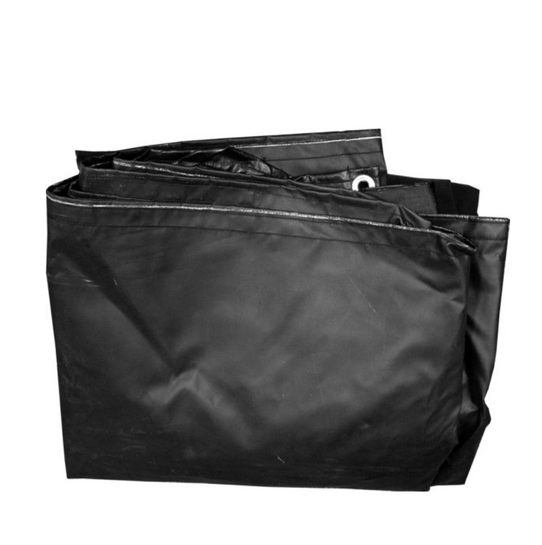
When flatbed trucking or hauling lumber loads with a drop-deck trailer, protecting a lumber load from the elements ensures compliance, safety, and profitability.
Lumber tarps, then, are a critical investment for professional drivers hauling lumber loads of all sizes as well as other kinds of cargo like construction supplies.
What Are Lumber Tarps?
Lumber tarps are specialized heavy-duty tarps designed specifically for covering tall stacked loads on trailers.
Lumber tarps feature an end flap providing complete coverage for stacked cargo like lumber, plywood, OSB, wallboard, trusses, and trim molding.
The design of a lumber tarp includes a rectangular body with drops (i.e., the length of sides of tarp) ranging from 4 feet to 10 feet, depending on load height.
The end flap seals the corners to ensure shipments arrive without damage. End flaps protect cargo from rain, snow, wind, road debris, and harmful UV rays during transport.
Why Quality Lumber Tarps Matter for Flatbed Hauling
Professional flatbed drivers understand that cargo protection goes beyond preventing weather damage. High-quality lumber tarps serve multiple critical functions:
- Load Security and DOT Compliance: The Federal Motor Carrier Safety Administration has detailed requirements for cargo securement. That includes specific regulations for dressed lumber. Properly secured tarps prevent materials from shifting or falling during transport. Compliant tarping helps avoid costly DOT violations and fines.
- Cargo Protection: Water exposure can warp wood, compromise structural integrity, and lead to expensive cargo claims. Quality lumber tarps create a waterproof barrier that keeps your load dry and pristine from pickup to delivery.
- Professional Reputation: Delivering undamaged cargo consistently builds trust with shippers and receivers.
Understanding Lumber Tarp Sizes and Specifications
Selecting the right lumber tarp size depends on your typical load dimensions and trailer configuration. Standard lumber tarp sizes include 8' drops and 6' drops. Two 8-foot drop lumber tarps for one load is an industry-standard choice for typical lumber-hauling applications.
For maximum flexibility, many professional drivers opt for lumber-tarp sets that split weight across separate sections to make physical handling easier while providing complete coverage for longer loads.
Material Quality: What Makes a Superior Lumber Tarp
Vinyl-coated polyester fabric has great strength and weather resistance. It offers excellent protection against:
- Extreme temperatures
- UV radiation damage
- Water penetration
- Abrasion from cargo and road conditions
Look for reinforcement features like brass grommets spaced every 30 inches and multiple rows of stainless steel D-rings.
Custom Lumber Tarps
A hauling operation can benefit from specifying exact dimensions, features, and configurations that match specific needs.
Tarps by Debrovy's are manufactured in Louisville, Kentucky, using premium 18-ounce vinyl-coated fabric. You can customize your lumber tarp with:
- Any color vinyl material and poly webbing
- Additional rows of D-rings for enhanced securement, sewn under continuous rows of 2"-wide webbing
Our typical turnaround time is 3–5 business days.
Lumber Tarps vs. Steel Tarps
Lumber tarps include an additional tail-end flap while steel tarps do not.
Steel tarps are for lower-profile loads, like steel sheets, that don't require coverage on the vertical end.
Lumber tarps accommodate taller stacks with the extended flap, making these ideal for building materials and equipment.
Proper Lumber Tarp Installation and Securement
- Prepare the load: Properly stack and secure the load before tarping
- Unfold the tarp completely: Spread the tarp evenly with no wrinkles or folds that could create wind pockets
- Center the coverage: Make sure the tarp is even on both trailer sides
- Secure the end flap: Ensure a tight seal between the trailer and cargo on the back
- Use appropriate tie-downs
- Protect the tarp with corner and edge protectors on sharp cargo edges to prevent tearing
Reserve roadside tarping for rest stops or parking lots. Never attempt to cover cargo alongside moving traffic.
Extending the Life of Lumber Tarps
- Regular Cleaning: Remove dirt, road salt, and debris after each use with mild soap and water. Accumulated grime can degrade fabric, adding unnecessary weight.
- Proper Storage: Dry tarps completely before storage to prevent mildew and fabric degradation. Store in a cool dry location away from direct sunlight when not in use.
- Routine Inspections: Check seams, grommets, and fabric for wear before each use. Small tears can quickly expand under highway conditions. Address repairs promptly with a proper tarp-repair kit.
- Strategic Folding: Roll or fold tightly to avoid permanent creases from becoming weak points. Rotate tarps regularly to distribute wear evenly across the tarp fleet.
Meeting DOT Regulations and State Requirements
The Federal Motor Carrier Safety Administration mandates that commercial truck drivers use a securement system, such as tarps and tiedowns, whenever necessary to protect a load.
Federal regulations generally take precedence for commercial motor vehicles in interstate commerce.
Specific tarping requirements vary by state and cargo type. Many state regulations concern specific materials like gravel, sand, and aggregate that require covering to prevent road-debris hazards.
Properly secured lumber tarps serve dual purposes: protecting cargo and demonstrating regulatory compliance during DOT inspections.
Need coverage for lumber loads? Explore Debrovy's selection of custom-manufactured lumber tarps!